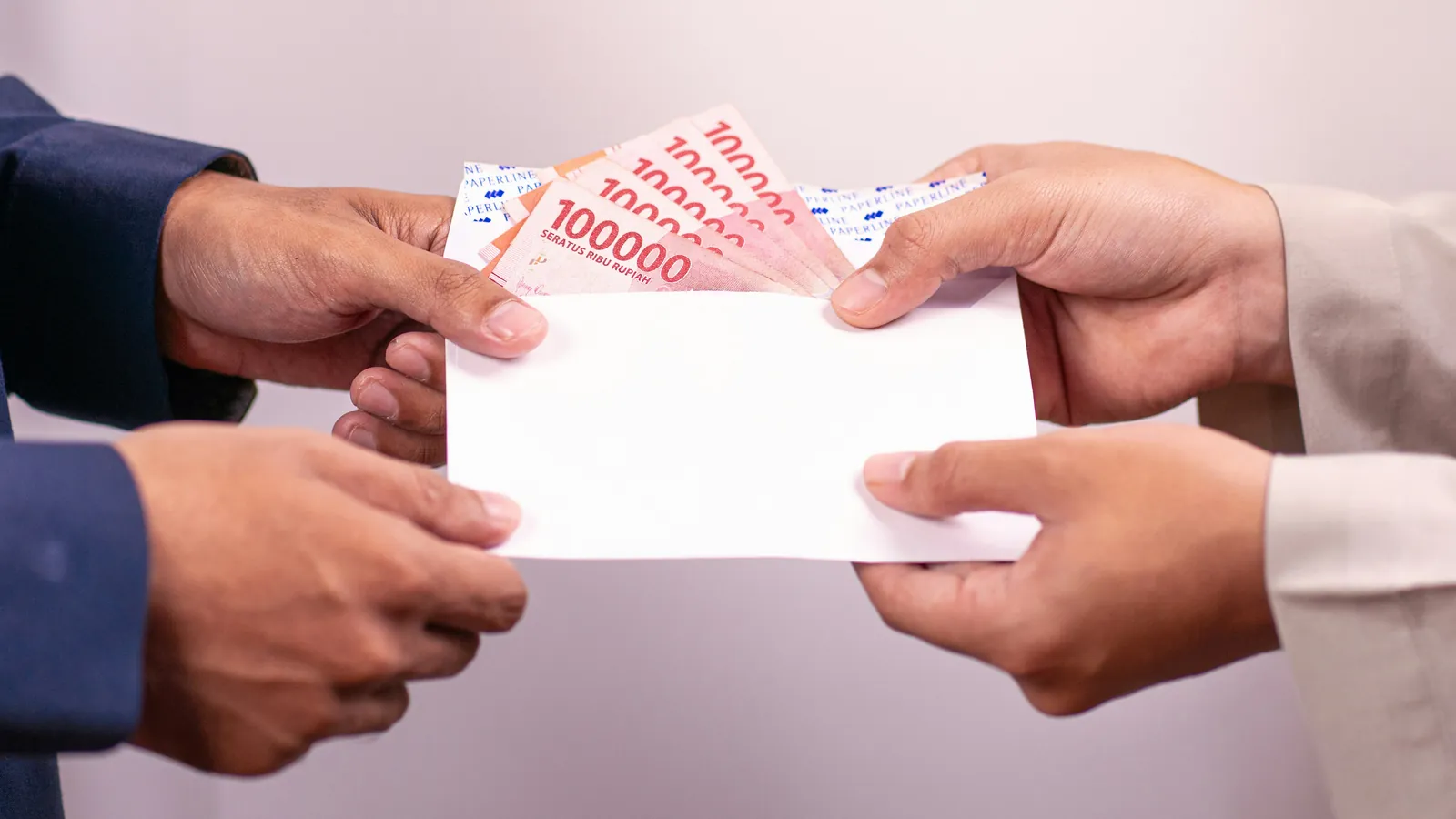
A loan agreement between private persons does not need a notary, and the law does not require written form for it — a verbal agreement is valid too. But a written contract is the only reliable way to prove later how much money was given, when it has to be paid back and whether interest was agreed. Write down at least the amount, the repayment date and the interest, and hand the money over by bank transfer.
Why a written contract is needed
When you lend money to a friend or relative, a contract often seems unnecessary. The problems usually come later, when nobody remembers exactly what was said. Was it a loan or a gift? Was the deadline "by the end of the summer" or "when I can"?
The weakness of a verbal agreement is not its validity but proving it. There is more on this in the article Is a verbal agreement binding?
What to write in the contract
A good loan agreement answers these questions:
- The parties. Name, personal identification code, address and contact details for both.
- The amount and the handover. How much money is given and how. A bank transfer is the best evidence. In the description write, for example, "loan under agreement".
- Repayment. A fixed date, or a payment schedule with the size and dates of the instalments.
- Interest. The annual interest rate and when the interest is paid. If the loan is interest-free, say that clearly too.
- Late-payment interest. What happens if a payment is late.
- Early repayment. Whether the borrower may pay earlier and whether interest is then still due for the remaining time.
- Security or surety. If there is one.
- Changes. That changes to the contract are made in writing.
On paper or digitally
The contract can be signed on paper or with a digital signature. A digitally signed file is as good evidence as a paper contract, and it is easier to keep.
Alongside the contract, also keep everything that proves the money moved:
- the bank statement for the loan being handed over;
- the statements of the repayments;
- correspondence that talks about the loan or the payments.
If the loan is repaid in several instalments, note down every payment. That way it is clear later how much is still outstanding.
Interest: only if it has been agreed
If the loan is not given in the course of economic or professional activity, interest must be paid only if it has been agreed. If the contract has no interest, a loan between private persons is generally interest-free.
If interest was agreed but not the rate, the usual rate for similar loans is presumed. Failing that, the statutory rate applies. Such a situation causes disputes, so always write a fixed percentage per year.
Unless the contract says otherwise, interest is calculated and due at the end of each calendar year. If the loan has to be repaid before the end of the year, the interest is paid together with the loan. If you want to receive interest, say, every month, put that in the contract.
Late-payment interest if a payment is late
If the borrower is late with a payment, the lender may claim late-payment interest from the due date. If no late-payment interest was agreed, the statutory rate is the European Central Bank's main refinancing operations rate plus eight percent a year.
The rate of late-payment interest can be agreed differently in the contract. But a court may reduce excessive late-payment interest, so a reasonable rate is safer for both parties.
The deadline and early repayment
The deadline is the most important line in the contract. If no deadline has been agreed, the lender can demand the money back only after terminating the contract. Termination of an open-ended loan agreement requires at least two months' notice.
Some rules apply even if the contract doesn't mention them:
- an interest-free loan may be repaid by the borrower at any time, without notice;
- if the loan is repaid in instalments and the borrower is in arrears with more than two instalments or with one instalment for more than three months, the lender may terminate the contract and demand the whole loan back at once;
- the lender may also terminate the contract if the borrower fails to pay the interest.
For a loan with interest, write in the contract whether early repayment is allowed and how interest is then calculated.
Security and surety
For a larger amount it is worth thinking about security.
- Surety. The surety promises to pay if the borrower doesn't. If the surety is a private person, their declaration must be in writing and the contract must state the maximum amount up to which they are liable. Without a maximum amount such a contract of suretyship is void.
- Property as security. For example a car or other property. Putting real estate up as security is more complicated and requires a notary.
A loan agreement or an IOU?
In everyday Estonian, a document by which someone confirms that they owe money is often called a "võlakiri". In the law its name is võlatunnistus (acknowledgement of debt). In the legal sense, a "võlakiri" is actually a bond, a security.
The difference is simple:
- A loan agreement is made before the money is given, and all the terms are agreed in it: the amount, the deadline, the interest and the rest.
- An acknowledgement of debt is the debtor's confirmation that the debt exists. It is often made afterwards, for example if the money was lent verbally. An acknowledgement of debt given by a private person must be in writing.
If you are lending money now, make a loan agreement. If the money has already been given without a contract, ask the borrower for a written confirmation with the amount and the repayment date. If the debt is repaid in instalments, a debt settlement agreement suits this.
If the loan isn't repaid
Act in order and leave a trace of everything:
- A reminder. Write to the borrower and ask when they will pay.
- A written demand. Send an e-mail with the amount of the debt, the late-payment interest, a new deadline and your bank account.
- Expedited payment order procedure. A money claim can be filed with the court in an expedited procedure that is simpler than ordinary court proceedings. If the debtor raises no objections, the court issues a payment order, on the basis of which a bailiff can collect the debt.
Don't wait too long. Claims arising from a contract expire. Generally the limitation period is three years from when the money should have been repaid. In the case of an intentional breach it may be longer.
Taxes
Lending money and getting it back is not income for you, but interest received on a loan is subject to income tax.
- If the borrower is a private person who is not a sole proprietor (FIE), they do not have to withhold income tax on the interest. As the lender you declare the interest received yourself in your tax return.
- If the borrower is a company, it must withhold income tax on interest paid to a natural person.
You can find the exact rates and the declaration procedure on the Tax and Customs Board's website.
Common mistakes
- Cash without a receipt. It is hard to prove later that the money was given at all. Use a bank transfer or get a signed receipt.
- No deadline. Then the loan is open-ended, and to get the money back you have to terminate the contract and wait at least two months.
- "I'll pay when I can." Such a deadline is vague and causes a dispute about when the debt is actually due.
- The interest wasn't written down. Between private persons this generally means there is no interest.
- The agreement exists only in messages. Messages help as evidence, but the terms are scattered and easy to interpret differently.
If you are lending to a company or the loan is related to business, see the general loan agreement template.